Monday, September 19, 2005


Friday, September 16, 2005
Enthusiast uses Google to reveal Roman ruins

Google Earth programme leads to remains of ancient villa.
Using satellite images from Google Maps and Google Earth, an Italian computer programmer has stumbled upon the remains of an ancient villa. Luca Mori was studying maps of the region around his town of Sorbolo, near Parma, when he noticed a prominent, oval, shaded form more than 500 metres long. It was the meander of an ancient river, visible because former watercourses absorb different amounts of moisture from the air than their surroundings do.
His eye was caught by unusual 'rectangular shadows' nearby. Curious, he analysed the image further, and concluded that the lines must represent a buried structure of human origin. Eventually, he traced out what looked like the inner courtyards of a villa.
Mori, who describes the finding on his blog, Quellí Della Bassa, contacted archaeologists, including experts at the National Archaeological Museum of Parma. They confirmed the find. At first it was thought to be a Bronze Age village, but an inspection of the site turned up ceramic pieces that indicated it was a Roman villa.
"Mori's research is interesting in its approach," says Manuela Catarsi Dall'Aglio, an archaeologist at the National Archaeological Museum of Parma. He says the find may be similar to a villa the museum is currently excavating at Cannetolo di Fontanellato, which was found during the construction of a high-speed rail network. "Only a scientific, archeological dig will tell," he adds.
The local authorities will have to approve any archaeological digs before they can take place.
Source Nature
Thursday, September 15, 2005
Beltway vs. Blogosphere
Democrats are struggling to reconcile the differences between party leaders in D.C. and independent activists on the Net.
Sept. 14, 2005 - If I am hearing Simon Rosenberg right (and he is worth listening to), a nasty civil war is brewing within the Democratic Party, and Sen. Hillary Rodham Clinton—the party’s presumptive 2008 nominee—needs to avoid getting caught in the middle of it.
“It’s not a fight between liberals and conservatives,” Rosenberg told me the other day. “It’s between our ‘governing class’ here and activists everywhere else.”
In other words, it’s the Beltway versus the Blogosphere.
Continue
Sept. 14, 2005 - If I am hearing Simon Rosenberg right (and he is worth listening to), a nasty civil war is brewing within the Democratic Party, and Sen. Hillary Rodham Clinton—the party’s presumptive 2008 nominee—needs to avoid getting caught in the middle of it.
“It’s not a fight between liberals and conservatives,” Rosenberg told me the other day. “It’s between our ‘governing class’ here and activists everywhere else.”
In other words, it’s the Beltway versus the Blogosphere.
Continue
Google finds blog search

Google Inc. on Wednesday began testing a search service for Web logs. "Blog Search will help our users explore the blogging universe more effectively, and perhaps inspire many to join the revolution themselves," the company said at www.google.com/blogsearch.
Google's database includes only stories posted on blogs by publishers who have alerted monitoring services. It does not include traditional news Web sites, weather or stock quotes. Blog searches can be saved and will be updated automatically when a pertinent item is received.
"The 800-pound gorilla just entered the blogosphere," said Charlene Li, principal analyst with Forrester Research (FORR: news, chart, profile) . She added that Google's experience at understanding how to present search results with relevance (putting the most important entries higher up) will be "the secret sauce to Google's blog-search success."
Li suggests that other blog search services, like Technorati or Feedster, could be in for some tough times not just with Google in the game, but with expected offerings of blog search from major portals. "Their arrival will tighten the noose even more on smaller players," she wrote on her own blog.
Continue article
Saturday, September 10, 2005
'Father of Internet' returns to roots with new Google job
Adding to its all-star roster of engineering talent, Google has hired Vinton Cerf, often referred to as the ``father of the Internet.''
Cerf, who was awarded the National Medal of Technology by President Bill Clinton in 1997, joins Google from MCI, where he is senior vice president of technology strategy.
Cerf's role at Google is unclear. But Google executives said they expect ``great things'' from the Internet pioneer.
``It's true Vint has broad interests, and exactly what he'll do, we'll see,'' said Bill Coughran, a vice president of engineering at Google.
Cerf, 62, will join Google in early October, along with his chief of staff from MCI. He'll work from his McLean, Va., home. But Coughran said he expected Cerf to make frequent visits to Google's Mountain View headquarters.
While at MCI for the past 11 years, much of Cerf's focus has been on public policy issues. In an interview, Cerf said he has hungered to return to developing applications.
``What I wanted was to turn my attention to a much higher level of applications, and Google offered me that,'' Cerf said.
More
Cerf, who was awarded the National Medal of Technology by President Bill Clinton in 1997, joins Google from MCI, where he is senior vice president of technology strategy.
Cerf's role at Google is unclear. But Google executives said they expect ``great things'' from the Internet pioneer.
``It's true Vint has broad interests, and exactly what he'll do, we'll see,'' said Bill Coughran, a vice president of engineering at Google.
Cerf, 62, will join Google in early October, along with his chief of staff from MCI. He'll work from his McLean, Va., home. But Coughran said he expected Cerf to make frequent visits to Google's Mountain View headquarters.
While at MCI for the past 11 years, much of Cerf's focus has been on public policy issues. In an interview, Cerf said he has hungered to return to developing applications.
``What I wanted was to turn my attention to a much higher level of applications, and Google offered me that,'' Cerf said.
More
Thursday, September 08, 2005
The Growing influence of Liberal Blogs
MyDD just finished a study on blog traffic during the Hurricane and, interestingly, when looking at the 100 most trafficked blogs and netroots sites, the liberal sites had traffic increases of 34% while the conservatives had traffic increases of only 8%.
One factoid I particularly liked:
All six of these blogs (Dailykos, Talking Points Memo, Raw Story, Eschaton, Crooks and Liars and Americablog) now have more traffic than Instapundit, which remains the highest trafficked conservative blog
See Blogs and Comments
One factoid I particularly liked:
All six of these blogs (Dailykos, Talking Points Memo, Raw Story, Eschaton, Crooks and Liars and Americablog) now have more traffic than Instapundit, which remains the highest trafficked conservative blog
See Blogs and Comments
Wednesday, September 07, 2005
Changes in Saturn Rings Baffle Scientists
LOS ANGELES -- New observations by the international Cassini spacecraft reveal that Saturn's trademark shimmering rings, which have dazzled astronomers since Galileo's time, have dramatically changed over just the past 25 years.
Among the most surprising findings is that parts of Saturn's innermost ring _ the D ring _ have grown dimmer since the Voyager spacecraft flew by the planet in 1981, and a piece of the D ring has moved 125 miles inward toward Saturn.
More
Among the most surprising findings is that parts of Saturn's innermost ring _ the D ring _ have grown dimmer since the Voyager spacecraft flew by the planet in 1981, and a piece of the D ring has moved 125 miles inward toward Saturn.
More
Friday, September 02, 2005
Chimp genetic code opens human frontiers
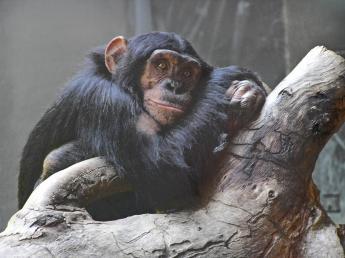
Scientists unleashed a torrent of studies comparing the genetic coding for humans and chimpanzees on Wednesday, reporting that 96 percent of our DNA sequences are identical. Even more intriguingly, the other 4 percent appears to contain clues to how we became different from our closest relatives in the animal kingdom, they said.
"We're really looking at an individual evolutionary event, and this is spectacular," said University of Washington geneticist Robert Waterston, senior author of a study in the journal Nature presenting the draft of the chimpanzee genome.
The achievement should lead to discoveries with implications for human health, including new approaches to treating age-old diseases, said Francis Collins, director of the National Human Genome Research Institute.
Full story
Tuesday, August 30, 2005
New on TV: The Multiple-Channel Screen
When pro football starts in September, fans who sign up for the "SuperFan" game package offered by satellite operator DirecTV Group Inc. will get a new feature: a channel on which they'll be able to watch eight games on one screen.
Read on
Read on
Saturday, August 27, 2005
Chavez calls for democracy at work
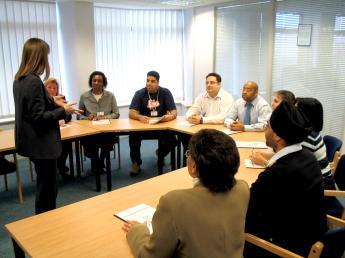
This is one of two big aluminium plants in the south-eastern city of Puerto Ordaz, where most of Venezuela's basic industries are concentrated.
It is also the test bed for a new experiment in co-management, which President Hugo Chavez says is a key step towards a "socialism of the twenty-first century".
Alcides Rivero, who works here as a maintenance electrician, says co-management means that for the first time in this company's 37 years of existence, the workforce has control.
"It's us, the workers", he says, "who decide on questions of production and technology, and it's us who elect who will be our managers."
Full article from BBC
Science and Technology in Decline?
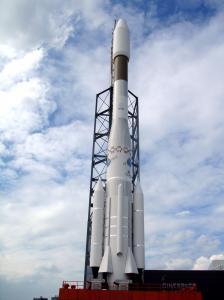
In his weekly opinion column, Harold Evans considers rising concern in the US over the Bush administration's hostility to science.
I used to get mad at the way it was left to America to bring to full fruition fine achievements by Britain's scientists, inventors and engineers. Take Alexander Fleming's penicillin, Frank Whittle's jet engine, Alan Turing's computer and Robert Watson Watt's radar.
All these breakthroughs found their fullest exploitation in the United States. Indeed, they all contributed to America's pre-eminence in science-based manufacturing and services.
Think of the personal computer and wonder drugs, of the jumbo jetliner, video games and the pacemaker, the laser that counts your groceries and the laser, or the global positioning satellite, that tells you to turn left at the roundabout.
That is why there is furious bewilderment here in the universities and the higher levels of business at the chilly indifference - not to say hostility - of the Bush White House to science. Continue reading.
A forum posting on the same topic
Monday, August 22, 2005
Like Concorde, Space Shuttle Was Ahead of its Time
With the obvious impending demise of the Space Shuttle program, NASA is faced with the same problem as the owners of 'broken down old cars: pay for repairs or get rid of it immediately.' In this op-ed from Le Monde, a look at the global ramifications of Discovery's latest flight.
One day, perhaps, the space shuttle will be tenable. In the distant future, technological progress will permit manned space vessels to break free of the Earth and return with the occupants without much concern or effort, as it is in science fiction movies.
In the mean time, problems persist, as demonstrated by the return flight of Discovery from July 26 to August 9. And these problems can be dangerous, with passengers placed in a vehicle the components of which are likely to be damaged during launch. Despite all the improvements made over the two-and-half years since the disintegration of Columbia and the death of its seven crew members, a few chunks of insulation broke off [during liftoff], threatening the integrity of Discovery’s heat shield.
Full article translated from French with photos
One day, perhaps, the space shuttle will be tenable. In the distant future, technological progress will permit manned space vessels to break free of the Earth and return with the occupants without much concern or effort, as it is in science fiction movies.
In the mean time, problems persist, as demonstrated by the return flight of Discovery from July 26 to August 9. And these problems can be dangerous, with passengers placed in a vehicle the components of which are likely to be damaged during launch. Despite all the improvements made over the two-and-half years since the disintegration of Columbia and the death of its seven crew members, a few chunks of insulation broke off [during liftoff], threatening the integrity of Discovery’s heat shield.
Full article translated from French with photos
Sunday, August 21, 2005
The Wisdom of Crowds
The Wisdom of Crowds (2004, Full title: The Wisdom of Crowds: Why the Many Are Smarter Than the Few and How Collective Wisdom Shapes Business, Economies, Societies and Nations) is a book written by James Surowiecki about the aggregation of information in groups, resulting in decisions that, he argues, are often better than could have been made by any single member of the group. The book presents numerous case studies and anecdotes to illustrate its argument, and touches on several fields, primarily economics and psychology.
For Reference
For Reference
Running On Fumes: A Journey To The End Of Empire
"We Americans should feel a sense of jubilation regarding the coming end of an era where oil and its attendant imperialist politics have come to define the lives of multiple generations. Maybe as our dependence on oil recedes, our human thirst for the water of life will return."
August 20, 2005
By Phil Rockstroh
August 20, 2005
By Phil Rockstroh
Saturday, August 20, 2005
What is Blade Runner?

Blade Runner is the best and one of the most influential Science Fiction films ever made. Based on the excellent book "Do Androids Dream of Electric Sheep", by Philip K. Dick, Ridley Scott created Blade Runner as a stunning view of the dark near-future. Although seen as disturbingly bleak when it was first released, as time has moved on, it can now be seen as increasingly prophetic of the way the world is changing.
Deckard is a retired Blade Runner - a hunter of 'Replicants', (androids of the future created by the Tyrell Corporation to be "more human than human"). Replicants were declared illegal on Earth, but a group of the most advanced, the Nexus-6 Replicants, have hijacked a shuttle and returned from off-world. Deckard is forced back from retirement and it is his job to terminate them.
What do these Replicants want? Simple - they want "More Life". They have been limited with a four year lifespan. They are created as slave labour, but all they want is to live like humans. Led by the charismatic and very intelligent Roy Batty, they seek to confront their 'maker', Eldon Tyrell, head of one of the most powerful corporations on Earth.
In the action that sprawls across a fantastic, futuristic cityscape of Los Angeles, 2019, we follow the dehumanised Blade Runner as he chases down the renegade Replicants. Things are complicated with the addition of a new Replicant created by Tyrell as an 'experiment'. The new addition, Rachael, has been gifted with memories and believes she is human, before she discovers what she really is.
Blade Runner is visually stunning, with a cityscape that has been much copied, but never bettered, even after 20 years. The atmosphere is beautifully enhanced by the music of Vangelis. The actors are brilliant and many have gone on to successful careers. Ultimately, the movie leaves us asking those most fundamental philosophical questions, "What does it mean to be human" and "Who am I".
Visit the site
Friday, August 19, 2005
Wake up and smell the TV
Virtual reality television to be a commercial reality in 15 years
Japan plans to make futuristic television a commercial reality by 2020 as part of a broad national project.
TOKYO, Japan (Reuters) -- Imagine watching a football match on a TV that not only shows the players in three dimensions but also lets you experience the smells of the stadium and maybe even pat a goalscorer on the back.
Japan plans to make this futuristic television a commercial reality by 2020 as part of a broad national project that will bring together researchers from the government, technology companies and academia.
The targeted "virtual reality" television would allow people to view high-definition images in 3D from any angle, in addition to being able to touch and smell the objects being projected upwards from a screen parallel to the floor.
"Can you imagine hovering over your TV to watch Japan versus Brazil in the finals of the World Cup as if you are really there?" asked Yoshiaki Takeuchi, director of research and development at Japan's Ministry of Internal Affairs and Communications.
Full story
Japan plans to make futuristic television a commercial reality by 2020 as part of a broad national project.
TOKYO, Japan (Reuters) -- Imagine watching a football match on a TV that not only shows the players in three dimensions but also lets you experience the smells of the stadium and maybe even pat a goalscorer on the back.
Japan plans to make this futuristic television a commercial reality by 2020 as part of a broad national project that will bring together researchers from the government, technology companies and academia.
The targeted "virtual reality" television would allow people to view high-definition images in 3D from any angle, in addition to being able to touch and smell the objects being projected upwards from a screen parallel to the floor.
"Can you imagine hovering over your TV to watch Japan versus Brazil in the finals of the World Cup as if you are really there?" asked Yoshiaki Takeuchi, director of research and development at Japan's Ministry of Internal Affairs and Communications.
Full story
EuroAmericans.net
EuroAmericans.net highlights the European immigrant experience and serves as a starting point for Americans to explore their European heritage. The links on the following pages will connect you to resources on arts, culture, history, language, news and current events. EuroAmericans.net is also a provider of statistics on European immigrant groups living in America that are not readily available elsewhere.
What makes the United States unique is that almost all of our citizens are immigrants, or the descendents of immigrants. By highlighting the contributions of European immigrants to our country, visitors should come away with an enlightened perspective on immigration, including those arriving in America today, often representing Asian and Latin American countries.
Browse the site
What makes the United States unique is that almost all of our citizens are immigrants, or the descendents of immigrants. By highlighting the contributions of European immigrants to our country, visitors should come away with an enlightened perspective on immigration, including those arriving in America today, often representing Asian and Latin American countries.
Browse the site
Blog Box
Bells Are Ringing
Who could have predicted that one grieving mother would rouse the national media from its summer slumber, that the president's handlers would wake to mounting opposition and actually lower expectations for his Iraq folly, or that gas pump-sucking SUV-Americans would wake up one day and realize that the goal of oil men is actually to make lots and lots of money? The telltale signs of America finally waking up were front and center this week, and bloggers took note.
Read Blog Box
Who could have predicted that one grieving mother would rouse the national media from its summer slumber, that the president's handlers would wake to mounting opposition and actually lower expectations for his Iraq folly, or that gas pump-sucking SUV-Americans would wake up one day and realize that the goal of oil men is actually to make lots and lots of money? The telltale signs of America finally waking up were front and center this week, and bloggers took note.
Read Blog Box
Sunday, August 14, 2005
Pope desires 'new wave of faith'
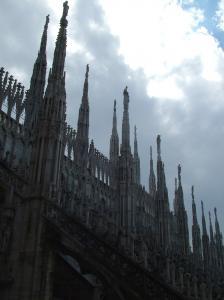
Pope Benedict XVI has said he hopes his forthcoming trip to his homeland Germany will give "new impulse" to the Roman Catholic Church in Europe.
He said the idea that Christianity is a burden with its many rules and prohibitions was a misconception.
Full article
Joseph Nocera: Why the odds are stacked against the little guy
....
Human beings simply aren't hard-wired to be good investors. Think about it: how many of us, really, have the fortitude to pare back our winners and buy more of our losers? Most of us do just the opposite. Heck, so do most mutual fund managers, which is why they can't beat the market either.
There is a reason we as a culture have accorded hero-like status to great investors like Warren Buffett and Peter Lynch. For all the cultural reinforcement we get that investing is something anybody ought to be able to master, we know in our bones it's not true. Buffett and Lynch are like great athletes, who have the skill and the emotional makeup to do something well that the rest of us can only dream about.
....
Full article
Human beings simply aren't hard-wired to be good investors. Think about it: how many of us, really, have the fortitude to pare back our winners and buy more of our losers? Most of us do just the opposite. Heck, so do most mutual fund managers, which is why they can't beat the market either.
There is a reason we as a culture have accorded hero-like status to great investors like Warren Buffett and Peter Lynch. For all the cultural reinforcement we get that investing is something anybody ought to be able to master, we know in our bones it's not true. Buffett and Lynch are like great athletes, who have the skill and the emotional makeup to do something well that the rest of us can only dream about.
....
Full article
Subscribe to:
Posts (Atom)
