The public space travel business is picking up suborbital speed thanks to a variety of private rocket groups and their dream machines.
Joining the mix is Blue Origin's New Shepard Reusable Launch System. It is financially fueled by an outflow of dollars from the deep pockets of billionaire Jeff Bezos, founder of Amazon.com.
The Bezos-backed Blue Origin, LLC commercial space outfit has recently turned in a draft environmental assessment (EA) for their West Texas launch site to the Federal Aviation Administration's (FAA) Associate Administrator for Commercial Space Transportation (AST) in Washington, D.C.
The document is the best glimpse yet of what Blue Origin is scoping out to develop "safe, inexpensive and reliable human access to space."
Privately-owned property...
Wednesday, July 05, 2006


Tuesday, July 04, 2006
Via Web, talk gets a lot cheaper
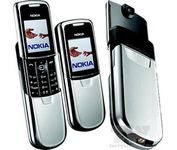
Competition in the phone business, intensifying this year as Internet-based calling has taken root, has reached the point where many industry experts are expecting an era of remarkably cheap and even free calls.
That era would be built on a vast migration of phone service from traditional networks to the Internet, where the calls become just another way to use Internet connections that consumers are paying for anyway.
"People are going to look at voice communications as something they expect to get for free," said Henry Gomez, general manager of Skype, which eBay bought last year for $2.6 billion. The company usually charges a few cents a minute for calls from computers to regular phones, but in May it scrapped those fees through the end of the year for users in the United States and Canada.
New competitors, including the major cable companies and start-ups like Vonage and SunRocket, are putting intense pressure on traditional phone companies like AT&T and Verizon that have built multibillion-dollar empires by selling phone service over copper wires. On the defensive, AT&T and Verizon are discounting heavily and pushing customers toward packages of more advanced services.
Online services like Skype that offer free calls from computer to computer for users with headset have attracted the tech-savvy and are trying to push into the mainstream. In the process, they are dragging down everyone else's prices and pointing the way toward a time when it will be harder for companies to charge anything for a basic home phone line on its own.
Continue reading
Monday, July 03, 2006
Britons see US as vulgar empire builder
By Ben Fenton
(Filed: 03/07/2006)
Britons have never had such a low opinion of the leadership of the United States, a YouGov poll shows.
As Americans prepare to celebrate the 230th anniversary of their independence tomorrow, the poll found that only 12 per cent of Britons trust them to act wisely on the global stage. This is half the number who had faith in the Vietnam-scarred White House of 1975.
Most Britons see America as a cruel, vulgar, arrogant society, riven by class and racism, crime-ridden, obsessed with money and led by an incompetent hypocrite.
More at http://www.telegraph.co.uk/news
(Filed: 03/07/2006)
Britons have never had such a low opinion of the leadership of the United States, a YouGov poll shows.
As Americans prepare to celebrate the 230th anniversary of their independence tomorrow, the poll found that only 12 per cent of Britons trust them to act wisely on the global stage. This is half the number who had faith in the Vietnam-scarred White House of 1975.
Most Britons see America as a cruel, vulgar, arrogant society, riven by class and racism, crime-ridden, obsessed with money and led by an incompetent hypocrite.
More at http://www.telegraph.co.uk/news
Monday, June 19, 2006
No sex please, robot, just clean the floor
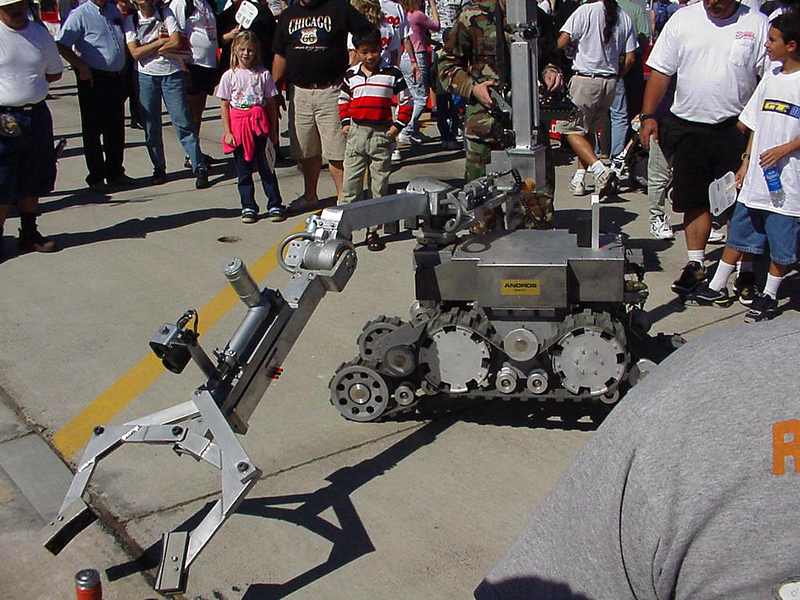
THE race is on to keep humans one step ahead of robots: an international team of scientists and academics is to publish a “code of ethics” for machines as they become more and more sophisticated.
Although the nightmare vision of a Terminator world controlled by machines may seem fanciful, scientists believe the boundaries for human-robot interaction must be set now — before super-intelligent robots develop beyond our control.
“There are two levels of priority,” said Gianmarco Verruggio, a roboticist at the Institute of Intelligent Systems for Automation in Genoa, northern Italy, and chief architect of the guide, to be published next month. “We have to manage the ethics of the scientists making the robots and the artificial ethics inside the robots.”
Verruggio and his colleagues have identified key areas that include: ensuring human control of robots; preventing illegal use; protecting data acquired by robots; and establishing clear identification and traceability of the machines.
Full article
Tuesday, June 13, 2006
Hawking says space colonies needed
By SYLVIA HUI, Associated Press Writer Tue Jun 13, 1:42 PM ET
HONG KONG - The survival of the human race depends on its ability to find new homes elsewhere in the universe because there's an increasing risk that a disaster will destroy the Earth, world-renowned astrophysicist Stephen Hawking said Tuesday.
Humans could have a permanent base on the moon in 20 years and a colony on Mars in the next 40 years, the British scientist told a news conference.
"We won't find anywhere as nice as Earth unless we go to another star system," added Hawking, who arrived in Hong Kong to a rock star's welcome Monday. Tickets for his lecture planned for Wednesday were sold out.
He added that if humans can avoid killing themselves in the next 100 years, they should have space settlements that can continue without support from Earth.
"It is important for the human race to spread out into space for the survival of the species," Hawking said. "Life on Earth is at the ever-increasing risk of being wiped out by a disaster, such as sudden global warming, nuclear war, a genetically engineered virus or other dangers we have not yet thought of."
The 64-year-old scientist — author of the global best seller "A Brief History of Time" — is wheelchair-bound and communicates with the help of a computer because he suffers from a neurological disorder called amyotrophic lateral sclerosis, or ALS.
Hawking said he's teaming up with his daughter to write a children's book about the universe, aimed at the same age group as the Harry Potter books.
"It is a story for children, which explains the wonders of the universe," said his daughter, Lucy, a journalist and novelist. They didn't provide other details.
source
Sunday, June 11, 2006
Is being a good dad ruining your career?

Fifteen years after women first tried to have it all, men now want the same. But is it possible both to impress the boss and be an attentive father? New dad Rafael Behr on the struggle to juggle career with fatherhood
Sunday June 11, 2006
The Observer
Read on...
Thursday, May 25, 2006
Vista Beta 2, up close and personal
Up in Redmond, Microsoft developers proudly talk of dogfooding the software they write. Running beta software is the only way to learn what works and what doesn’t. A copy of Windows Vista running on a test machine in the corner isn’t likely to get a serious workout. To find the pain points – another popular Microsoft expression – you have to run that beta code on the machine you use every day.
In that same spirit, I’ve spent the last three months running beta versions of Windows Vista on the PCs I use for everyday work. February and March were exasperating. April’s release was noticeably better, and the Beta 2 preview – Build 5381, released to testers in early May – has been running flawlessly on my notebook for nearly three weeks.
Read more and see a screenshot slideshow of the new OS...
In that same spirit, I’ve spent the last three months running beta versions of Windows Vista on the PCs I use for everyday work. February and March were exasperating. April’s release was noticeably better, and the Beta 2 preview – Build 5381, released to testers in early May – has been running flawlessly on my notebook for nearly three weeks.
Read more and see a screenshot slideshow of the new OS...
Plan for cloaking device unveiled
So far, cloaking has been confined to science fiction; in Star Trek it is used to render spacecraft invisible.
Professor Sir John Pendry says a simple demonstration model that could work for radar might be possible within 18 months' time.
Two separate teams, including Professor Pendry's, have outlined ways to cloak objects in the journal Science.
See
Professor Sir John Pendry says a simple demonstration model that could work for radar might be possible within 18 months' time.
Two separate teams, including Professor Pendry's, have outlined ways to cloak objects in the journal Science.
See
Encyclopedia > Moller Skycar
The Moller Skycar is a prototype personal VTOL (vertical take-off and landing) aircraft — a "flying car" — called a "volantor" by its inventor Paul Moller, who has been attempting to develop such vehicles for many years.1 The Skycar demonstrated limited tethered flight capability in 2003. More tethered flight tests are now scheduled for an undisclosed date sometime after mid 2006. Moller is currently upgrading the Skycar's engines, and the improved prototype is now called the "M400X". Download high resolution version (400x616, 66 KB)Poster for Skycar Illustration by me --Terrible Tim 15:35, 29 Jul 2004 (UTC) File history Legend: (cur) = this is the current file, (del) = delete this old version, (rev) = revert to this old version. ... Download high resolution version (400x616, 66 KB)Poster for Skycar Illustration by me --Terrible Tim 15:35, 29 Jul 2004 (UTC) File history Legend: (cur) = this is the current file, (del) = delete this old version, (rev) = revert to this old version. ... Image File history File links Moller_M400_hover_test. ... Image File history File links Moller_M400_hover_test. ... Prototypes or prototypical instances combine the most representative attributes of a category. ... Vertical Take-Off and Landing (VTOL) describes airplanes that can lift off vertically. ... Airbus A380 An aircraft is any machine capable of atmospheric flight. ... The Waterman Aerobile at the Smithsonian. ... Paul S. Moller (b. ...
More...
More...
Thursday, May 18, 2006
Last chromosome in human genome sequenced
Scientists have reached a landmark point in one of the world's most important scientific projects by sequencing the last chromosome in the Human Genome, the so-called "book of life".
Chromosome 1 contains nearly twice as many genes as the average chromosome and makes up eight percent of the human genetic code.
It is packed with 3,141 genes and linked to 350 illnesses including cancer, Alzheimer's and Parkinson's disease.
"This achievement effectively closes the book on an important volume of the Human Genome Project," said Dr Simon Gregory who headed the sequencing project at the Sanger Institute in England.
The project was started in 1990 to identify the genes and DNA sequences that provide a blueprint for human beings.
Chromosome 1 is the biggest and contains, per chromosome, the greatest number of genes.
"Therefore it is the region of the genome to which the greatest number of diseases have been localized," added Gregory, from Duke University in the United States.
The sequence of chromosome 1, which is published online by the journal Nature, took a team of 150 British and American scientists 10 years to complete. Continued...
Chromosome 1 contains nearly twice as many genes as the average chromosome and makes up eight percent of the human genetic code.
It is packed with 3,141 genes and linked to 350 illnesses including cancer, Alzheimer's and Parkinson's disease.
"This achievement effectively closes the book on an important volume of the Human Genome Project," said Dr Simon Gregory who headed the sequencing project at the Sanger Institute in England.
The project was started in 1990 to identify the genes and DNA sequences that provide a blueprint for human beings.
Chromosome 1 is the biggest and contains, per chromosome, the greatest number of genes.
"Therefore it is the region of the genome to which the greatest number of diseases have been localized," added Gregory, from Duke University in the United States.
The sequence of chromosome 1, which is published online by the journal Nature, took a team of 150 British and American scientists 10 years to complete. Continued...
Wednesday, May 17, 2006
Trio of Neptune-size planets discovered
European astronomers reported the smallest planet yet spotted in the "habitable zone" of a nearby sun-like star on Wednesday.
About the size of Neptune, the planet circles the star HD 69830, some 41 light-years away in the southern sky (one light-year equals about 5.9 trillion miles.)
Two other slightly smaller planets orbit closer to the star, reports the discovery team led by Christophe Lovis of Switzerland's Geneva Observatory.
Detections of the planets "suggest that the search for habitable planets might be easier than assumed," says Harvard astronomer David Charbonneau, in a commentary accompanying the report in Thursday's Nature magazine. The habitable zone planet is not Earth-like, says Lovis, likely cloaked in a high-pressure hydrogen atmosphere.
more:
About the size of Neptune, the planet circles the star HD 69830, some 41 light-years away in the southern sky (one light-year equals about 5.9 trillion miles.)
Two other slightly smaller planets orbit closer to the star, reports the discovery team led by Christophe Lovis of Switzerland's Geneva Observatory.
Detections of the planets "suggest that the search for habitable planets might be easier than assumed," says Harvard astronomer David Charbonneau, in a commentary accompanying the report in Thursday's Nature magazine. The habitable zone planet is not Earth-like, says Lovis, likely cloaked in a high-pressure hydrogen atmosphere.
more:
Thursday, April 13, 2006
Natural light 'to reinvent bulbs'

A light source that could put the traditional light bulb in the shade has been invented by US scientists.
The organic light-emitting diode (OLED) emits a brilliant white light when attached to an electricity supply.
The material, described in the journal Nature, can be printed in wafer thin sheets that could transform walls, ceilings or even furniture into lights.
The OLEDs do not heat up like today's light bulbs and so are far more energy efficient and should last longer.
They also produce a light that is more akin to natural daylight than traditional bulbs.
"We're hoping that this will lead to significantly longer device lifetimes in addition to higher efficiency," said Professor Mark Thompson of the University of Southern California, one of the authors of the paper.
cont.
Thursday, March 16, 2006
Proving How the Universe Was Born
Physicists announced Thursday that they now have the smoking gun that shows the universe went through extremely rapid expansion in the moments after the big bang, growing from the size of a marble to a volume larger than all of observable space in less than a trillion-trillionth of a second.
The discovery -- which involves an analysis of variations in the brightness of microwave radiation -- is the first direct evidence to support the two-decade-old theory that the universe went through what is called inflation.
It also helps explain how matter eventually clumped together into planets, stars and galaxies in a universe that began as a remarkably smooth, super-hot soup.
"It's giving us our first clues about how inflation took place," said Michael Turner, assistant director for mathematics and physical sciences at the National Science Foundation. "This is absolutely amazing."
Brian Greene, a Columbia University physicist, said: "The observations are spectacular and the conclusions are stunning."
Researchers found the evidence for inflation by looking at a faint glow that permeates the universe. That glow, known as the cosmic microwave background, was produced when the universe was about 300,000 years old -- long after inflation had done its work.
The discovery -- which involves an analysis of variations in the brightness of microwave radiation -- is the first direct evidence to support the two-decade-old theory that the universe went through what is called inflation.
It also helps explain how matter eventually clumped together into planets, stars and galaxies in a universe that began as a remarkably smooth, super-hot soup.
"It's giving us our first clues about how inflation took place," said Michael Turner, assistant director for mathematics and physical sciences at the National Science Foundation. "This is absolutely amazing."
Brian Greene, a Columbia University physicist, said: "The observations are spectacular and the conclusions are stunning."
Researchers found the evidence for inflation by looking at a faint glow that permeates the universe. That glow, known as the cosmic microwave background, was produced when the universe was about 300,000 years old -- long after inflation had done its work.
Wednesday, February 01, 2006
Honda Accord ADAS auto-pilot system takes the reins
Posted Jan 30th 2006 4:35PM by Paul Miller
Filed under: Transportation
We've heard of radar assisted cruise control, that has certain luxury cars running at set speeds on the highway, but slows them down or speeds them up when they get too close to a car in front or behind. Well now Honda UK is taking it to another level with their Advanced Driver Assist System (ADAS) that not only regulates your speed, but manages the turning, allowing you a full auto-pilot system for your Accord when you're out on the freeway. The Adaptive Cruise Control is your regular radar variety, but the Lane Keep Assist System keeps you headed in the right direction by using a camera on the rear-view mirror to watch the white lines and turn accordingly. Honda was quick to point out that their system isn't exactly set up for you to take a nap, since the ADAS system will beep every 10 seconds to make sure you're paying attention, requiring you to touch the steering wheel to inform the car you're still in charge, but we're sure someone is going manage an accident and an ensuing lawsuit or three out of this "convenience".
Source
Filed under: Transportation
We've heard of radar assisted cruise control, that has certain luxury cars running at set speeds on the highway, but slows them down or speeds them up when they get too close to a car in front or behind. Well now Honda UK is taking it to another level with their Advanced Driver Assist System (ADAS) that not only regulates your speed, but manages the turning, allowing you a full auto-pilot system for your Accord when you're out on the freeway. The Adaptive Cruise Control is your regular radar variety, but the Lane Keep Assist System keeps you headed in the right direction by using a camera on the rear-view mirror to watch the white lines and turn accordingly. Honda was quick to point out that their system isn't exactly set up for you to take a nap, since the ADAS system will beep every 10 seconds to make sure you're paying attention, requiring you to touch the steering wheel to inform the car you're still in charge, but we're sure someone is going manage an accident and an ensuing lawsuit or three out of this "convenience".
Source
Sunday, January 22, 2006
China to build world`s first "artificial sun" experimental device
HEFEI, 01/21 - A full superconducting experimental Tokamak fusion device, which aims to generate infinite, clean nuclear-fusion-based energy, will be built in March or April in Hefei, capital city of east China`s Anhui Province.
Experiments with the advanced new device will start in July or August. If the experiments prove successful, China will become the first country in the world to build a full superconducting experimental Tokamak fusion device, nicknamed "artificial sun", experts here said.
The project, dubbed EAST (experimental advanced superconducting Tokamak), is being undertaken by the Hefei-based Institute of Plasma Physics under the Chinese Academy of Sciences. It will require a total investment of nearly 300 million yuan (37 million U.S. dollars), only one fifteenth to one twentieth the cost of similar devices being developed in the other parts of the world.
The new device will be an upgrade of China`s first superconducting Tokamak device, dubbed HT-7, which was also built by the plasma physics institute, in partnership with Russia, in the early 1990s. HT-7 made China the fourth country in the world, after Russia, France and Japan, to have such a device.
Full article
Experiments with the advanced new device will start in July or August. If the experiments prove successful, China will become the first country in the world to build a full superconducting experimental Tokamak fusion device, nicknamed "artificial sun", experts here said.
The project, dubbed EAST (experimental advanced superconducting Tokamak), is being undertaken by the Hefei-based Institute of Plasma Physics under the Chinese Academy of Sciences. It will require a total investment of nearly 300 million yuan (37 million U.S. dollars), only one fifteenth to one twentieth the cost of similar devices being developed in the other parts of the world.
The new device will be an upgrade of China`s first superconducting Tokamak device, dubbed HT-7, which was also built by the plasma physics institute, in partnership with Russia, in the early 1990s. HT-7 made China the fourth country in the world, after Russia, France and Japan, to have such a device.
Full article
Tuesday, January 17, 2006
New Horizons will study Pluto and Kuiper Belt
CAPE CANAVERAL — A piano-sized space probe neared the end of its countdown Tuesday for a mission to Pluto, the solar system's last unexplored planet, and to study a mysterious zone of icy objects at the outer edges of the planetary system.
Even though the scheduled afternoon liftoff was intended to make New Horizons the fastest spacecraft ever launched, the distance involved means scientists won't be able to receive data on Pluto until at least July 2015, the earliest date the mission is expected to arrive.
"To make a decision to work in the field of space science is almost the ultimate in delayed gratification," NASA administrator Michael Griffin said at a news conference Tuesday.
A successful journey to Pluto would complete an exploration of the planets started by NASA in the early 1960s with unmanned missions to observe Mars, Mercury and Venus.
"What we know about Pluto today could fit on the back of a postage stamp," Colleen Hartman, a deputy associate administrator at NASA, said earlier. "The textbooks will be rewritten after this mission is completed."
Full article
Even though the scheduled afternoon liftoff was intended to make New Horizons the fastest spacecraft ever launched, the distance involved means scientists won't be able to receive data on Pluto until at least July 2015, the earliest date the mission is expected to arrive.
"To make a decision to work in the field of space science is almost the ultimate in delayed gratification," NASA administrator Michael Griffin said at a news conference Tuesday.
A successful journey to Pluto would complete an exploration of the planets started by NASA in the early 1960s with unmanned missions to observe Mars, Mercury and Venus.
"What we know about Pluto today could fit on the back of a postage stamp," Colleen Hartman, a deputy associate administrator at NASA, said earlier. "The textbooks will be rewritten after this mission is completed."
Full article
Friday, January 06, 2006
Google and Yahoo tune into television
Two ascending Internet giants, Google and Yahoo, were planning to make plain Friday that they intend to move aggressively beyond the Internet browser and onto the television screen.
The two companies, already the most popular services for searching and organizing the vast information on the Web, want to perform the same function for television, which will increasingly be delivered over the Internet.
Indeed, much of the innovation at the Consumer Electronics Show in Las Vegas, where top executives of both companies were to speak late Friday, revolves around video gadgets of all sizes that connect online to new programming services.
Both Yahoo and Google have emerged as potent threats to television networks because they are drawing ad dollars to their existing sites.
cont. http://www.iht.com/articles/2006/01/06/business/google.php
The two companies, already the most popular services for searching and organizing the vast information on the Web, want to perform the same function for television, which will increasingly be delivered over the Internet.
Indeed, much of the innovation at the Consumer Electronics Show in Las Vegas, where top executives of both companies were to speak late Friday, revolves around video gadgets of all sizes that connect online to new programming services.
Both Yahoo and Google have emerged as potent threats to television networks because they are drawing ad dollars to their existing sites.
cont. http://www.iht.com/articles/2006/01/06/business/google.php
Monday, January 02, 2006
Vote for seven wonders
The Acropolis in Athens made it, as did Angkor Wat temple in Cambodia, China's Great Wall, the Colosseum in Rome, the Inca temple of Machu Picchu in Peru, Stonehenge and the Moai - the Easter Island statues.
Less immediately obvious choices in a final shortlist of 21 contenders for the New Seven Wonders of the World, announced in Switzerland yesterday, included the Kremlin in Moscow, the Eiffel Tower and the Statue of Liberty.
Cont.
Less immediately obvious choices in a final shortlist of 21 contenders for the New Seven Wonders of the World, announced in Switzerland yesterday, included the Kremlin in Moscow, the Eiffel Tower and the Statue of Liberty.
Cont.
New Space Race: Make Extraterrestrial Travel Cheap And Safe For Ordinary People…
A plan to build the world’s first airport for launching commercial spacecraft in New Mexico is the latest development in the new space race, a race among private companies and billionaire entrepreneurs to carry paying passengers into space and to kick-start a new industry, astro tourism.
The man who is leading the race may not be familiar to you, but to astronauts, pilots, and aeronautical engineers – basically to anyone who knows anything about aircraft design – Burt Rutan is a legend, an aeronautical engineer whose latest aircraft is the world’s first private spaceship. As he told 60 Minutes correspondent Ed Bradley when he first met him a little over a year ago, if his idea flies, someday space travel may be cheap enough and safe enough for ordinary people to go where only astronauts have gone before.
Read more and post comments
The man who is leading the race may not be familiar to you, but to astronauts, pilots, and aeronautical engineers – basically to anyone who knows anything about aircraft design – Burt Rutan is a legend, an aeronautical engineer whose latest aircraft is the world’s first private spaceship. As he told 60 Minutes correspondent Ed Bradley when he first met him a little over a year ago, if his idea flies, someday space travel may be cheap enough and safe enough for ordinary people to go where only astronauts have gone before.
Read more and post comments
Friday, December 23, 2005
More Rings Are Found Around Planet Uranus
LOS ANGELES - Astronomers aided by the Hubble Space Telescope have spied two more rings encircling Uranus, the first additions to the planet's ring system in nearly two decades.
The faint, dusty rings orbit outside of Uranus' previously known rings, but within the orbits of its large moons, said Mark Showalter, an astronomer at the SETI Institute in Mountain View, Calif., who made the discovery.
Cont.
The faint, dusty rings orbit outside of Uranus' previously known rings, but within the orbits of its large moons, said Mark Showalter, an astronomer at the SETI Institute in Mountain View, Calif., who made the discovery.
Cont.
Subscribe to:
Posts (Atom)
