In 2000, Bill Clinton and Tony Blair jointly announced that a working draft of the human genome had been completed, paving the way for genetic tests and new treatments for cancer, diabetes, heart disease and even obesity.
So a decade on, has it lived up to its promise? And what are the other advances and milestones in medicine that have defined the past ten years?
Sir Mark Walport, director of the Wellcome Trust, says the work on the human genome project is beginning to realise some "fantastically important" results.
Read on
Wednesday, January 06, 2010


Monday, January 04, 2010
Moon hole might be suitable for colony
CNN) -- Building a home near a moon crater or a lunar sea may sound nice, but moon colonists might have a much better chance of survival if they just lived in a hole.
That's the message sent by an international team of scientists who say they've discovered a protected lunar "lava tube" -- a deep, giant hole -- that might be well suited for a moon colony or a lunar base.
Read more
That's the message sent by an international team of scientists who say they've discovered a protected lunar "lava tube" -- a deep, giant hole -- that might be well suited for a moon colony or a lunar base.
Read more
Monday, December 21, 2009
Name the New Super-Earth

Click here to see the names
Wednesday, December 02, 2009
Chevrolet Volt electric car
LOS ANGELES — General Motors says the Chevrolet Volt electric car will go on sale late next year in California.
GM said Wednesday at the Los Angeles Auto Show that it will announce other markets later.
The Volt, which is expected to cost around $40,000, can be charged in a conventional outlet and is designed to drive up to 40 miles on electricity. When its lithium-ion battery runs low, an engine kicks in to extend its driving range to more than 300 miles without refueling.
Story
GM said Wednesday at the Los Angeles Auto Show that it will announce other markets later.
The Volt, which is expected to cost around $40,000, can be charged in a conventional outlet and is designed to drive up to 40 miles on electricity. When its lithium-ion battery runs low, an engine kicks in to extend its driving range to more than 300 miles without refueling.
Story
Saturday, November 21, 2009
Franklin Chang Diaz has great aspirations for his rocket
LIBERIA, Costa Rica — Franklin Chang Diaz has great aspirations for his rocket: a mail-carrier for outer space, a garbage truck for orbital debris and, the ultimate goal, a shuttle to Mars.
The Costa Rica-born physicist speaks nonchalantly about the day humankind will have moved entirely to outer space, while our precious Earth becomes “a protected park.”
“Our great grandchildren will always be able to come back [to Earth] from wherever they happen to live and see where their ancestors and culture came from,” said the former NASA astronaut who is now president and CEO of the Ad Astra Rocket Company.
Full Story Here
The Costa Rica-born physicist speaks nonchalantly about the day humankind will have moved entirely to outer space, while our precious Earth becomes “a protected park.”
“Our great grandchildren will always be able to come back [to Earth] from wherever they happen to live and see where their ancestors and culture came from,” said the former NASA astronaut who is now president and CEO of the Ad Astra Rocket Company.
Full Story Here
Large Hadron Collider: Quick Restart Of World's Largest Atom Smasher Stuns Scientists
GENEVA — Scientists are preparing the world's largest atom smasher to explore the depths of matter after successfully restarting the $10 billion machine following more than a year of repairs.
When the machine is fully operational, its magnets will control the beams of protons and send them in opposite directions through two parallel tubes the size of fire hoses.
In rooms as large as cathedrals 300 feet (100 meters) under the Swiss-French border, the magnets will force them into huge detectors to record the reactions.
One goal is to unravel the mysteries of the Big Bang that many scientists theorize marked the creation of the universe billions of years ago. More here.
When the machine is fully operational, its magnets will control the beams of protons and send them in opposite directions through two parallel tubes the size of fire hoses.
In rooms as large as cathedrals 300 feet (100 meters) under the Swiss-French border, the magnets will force them into huge detectors to record the reactions.
One goal is to unravel the mysteries of the Big Bang that many scientists theorize marked the creation of the universe billions of years ago. More here.
The sci-fi legends who shaped today's tech

Science fiction has long inspired real-world technology, but have the authors of sci-fi stories finally run out of steam? Stuart Andrews investigates
In turn, real-world technology has inspired the science-fiction writer. After all, it’s science fiction that charts what happens when humanity meets high technology, asking what will happen, where it will take us, and what we’ll find when we get there. This is as true of computer technology as it was of the space race. Perhaps, even more so.
Read more.
Thursday, October 01, 2009
Oldest "Human" Skeleton Found--Disproves "Missing Link"
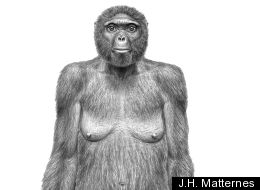
Scientists today announced the discovery of the oldest fossil skeleton of a human ancestor. The find reveals that our forebears underwent a previously unknown stage of evolution more than a million years before Lucy, the iconic early human ancestor specimen that walked the Earth 3.2 million years ago (interactive time line: how the new discovery changes human evolutionary theory).
Original Story
Monday, November 26, 2007
Evidence for a parallel universe?
Last August, astronomers working on the analysis of data being acquired by NASA’s WMAP (Wilkinson Microwave Anisotropy Probe) satellite announced that they found a huge void in the universe. A void is a region of space that has much less material (stars, nebulae, dust and other material) than the average. Since our universe is relatively heterogeneous, empty spaces are not rare, but in this case the enormous magnitude of the hole is way outside the expected range. The hole found in the constellation of Eridanus is about a billion light years across, which is roughly 10,000 times as large as our galaxy or 400 times the distance to Andromeda, the closest “large” galaxy.
The dimension of the hole is so big that at first glance, it results impossible to explain under the current cosmological theories, although scientists put forward some explanations based on certain theoretical models that might predict the existence of “giant knots” in space known as topological defects.
However, University of North Carolina at Chapel Hill physics Professor Laura Mersini-Houghton made a staggering claim. She says, “Standard cosmology cannot explain such a giant cosmic hole” and goes further with the ground-breaking hypothesis that the huge void is “… the unmistakable imprint of another universe beyond the edge of our own“.
Source
The dimension of the hole is so big that at first glance, it results impossible to explain under the current cosmological theories, although scientists put forward some explanations based on certain theoretical models that might predict the existence of “giant knots” in space known as topological defects.
However, University of North Carolina at Chapel Hill physics Professor Laura Mersini-Houghton made a staggering claim. She says, “Standard cosmology cannot explain such a giant cosmic hole” and goes further with the ground-breaking hypothesis that the huge void is “… the unmistakable imprint of another universe beyond the edge of our own“.
Source
Monday, June 04, 2007
Latest Sunscreens
All the buzz this year is about new ways to block wrinkle-causing UVA rays.
Last summer, the U.S. Food and Drug Administration approved a new compound called ecamsule for use in sunscreens sold in this country. Ecamsule, an organic filter that protects against UVA rays, has been included in sunscreens sold in Canada and Europe since 1993 under the name of Mexoryl SX.
Right now, the only over-the-counter product sold in the United States that uses ecamsule is L'Oreal's Anthelios SX. The sunscreen, which has an SPF of 15, also contains two other protective ingredients, avobenzone and octocrylene. Researchers say ecamsule offers longer protection and is better at absorbing UVA rays than anything else available. Anthelios SX is available at www.anthelios.com. A 3.4-ounce tube of the daily moisturizing cream sells for $29.
Another ingredient to watch for is Helioplex, a Neutrogena-patented stabilized form of avobenzone (Parsol1789), the most widely used ingredient for blocking UVA rays. Helioplex breaks down slower than regular avobenzone so it offers longer protection. Neutrogena patented Helioplex for use in many of its sun-protection products, but says the most popular is its new Fresh Cooling Sunblock Gel, which protects with SPF 30 against a broad spectrum of UVA and UVB rays. It is available at Target and other stores for $8.99.
Read more...Monday, May 14, 2007
Can Capitalism Be Green?
TORONTO - Capitalism has proven to be environmentally and socially unsustainable, so future prosperity will have to come from a new economic model, say some experts. What this new model would look like is the subject of intense debate.
One current theory states that continuous growth can be environmentally compatible if clean and efficient technologies are adopted, and if economies leave behind production of material goods and move towards services. This is known as sustainable prosperity.
International agreements to fight global problems, like the thinning of the atmosphere’s ozone layer and climate change, have used market principles to achieve compliance by the private sector.
But the problem is, “we are consuming 25 percent more than the Earth can give us each year,” says William Rees, of the School of Community and Regional Planning at the University of British Columbia.
Rees and other experts have calculated that annual human consumption of natural resources exceeds the planet’s ecological capacity to regenerate them by 25 percent, a proportion that has been growing since 1984, the first year they calculate that humanity crossed that capacity threshold.
more...
Monday, January 15, 2007
Is American Capitalism on Its Way Out?
A little over a decade ago, the American model of capitalism was triumphant. The Soviet Union had recently collapsed, recession took the shine off the vaunted Japanese model of the 1980's, the social-democratic models of northern and Western Europe languished in high unemployment and low growth, and the so-called East Asian miracle was soon to be engulfed in a financial crisis.
For the many developing and transition economies in search of a model, there was only one prescription: Liberalize, privatize and copy the Anglo- American institutions of legal, financial and corporate governance.
Today there is less certainty. The technology and housing booms in the United States have subsided. High American living on borrowed Asian money is now widely considered unsustainable; extreme income concentration at the very top with stagnation at the bottom has made the hollowness of the productivity growth particularly palpable for most working people.
Unemployment in the United States and Britain has generally been lower than in much of Europe, but crises looms in health insurance and social security.
Meanwhile, the social-democratic and Japanese models, after some necessary repair, have come alive. Their economies have revived while still keeping most of their distinctive institutional features, including a continuing emphasis on social protection and on a more coordinated style of corporate governance.
There is an increased appreciation of the fact that countries have different political contexts and the bargaining powers of the different stakeholders in the economic system — owners, managers and workers — vary.
For developing countries, the East Asian model has not lost its influence. The model is characterized by relative equality at first, followed by land reform and mass expansion of education, which helps smooth the wrenching conflicts and readjustments of early industrialization.
In addition, state coordination of private enterprise strengthens rather than stifles the market processes. The phenomenal growth of capitalism in China under pervasive government control has only added to the attraction of the basic East Asian model.
India, another high-growth country, has also not quite followed the economic orthodoxy in a systematic manner, particularly in matters of privatization, deregulation and fiscal deficit management.
In the 2006 "index of economic freedom" compiled by the Heritage Foundation, China and India rank far below most Latin American and many African countries. Yet the economic performance of the latter countries, which did follow the liberalizing and privatizing reforms of the Anglo-American model more faithfully during the last two decades, has been, with a few exceptions, disappointing.
Capitalism in both rich and poor countries has been afflicted by problems of rising inequality and environmental degradation. Globalization has increased anxiety everywhere about job security. This underlines the value of social safety nets in coping with adjustments to market competition.
We need to explore the many ways in which equity can be enhanced without giving up on efficiency. These include expansion of facilities of education, training and health care. In many poor countries the barriers faced by large numbers of people in credit markets sharply reduces the society's potential for productive investment, innovation and human-resource development.
Protest is not enough. It is necessary to explore viable and sustainable ways of constructing alternatives to capitalism.
On the other side, it is important to stress that single-minded pursuits of efficiency are bound to be counterproductive. In particular, a standardized policy prescription that ignores social and institutional diversities or the complexities of a particular society is a recipe for failure.
The accumulated resentment of the large numbers of losers worldwide in the process of globalization is already in danger of triggering a substantial backlash in many countries. The advocates of capitalism should try to protect it from the enthusiasts for any one particular variety of capitalism.
Source IHT
For the many developing and transition economies in search of a model, there was only one prescription: Liberalize, privatize and copy the Anglo- American institutions of legal, financial and corporate governance.
Today there is less certainty. The technology and housing booms in the United States have subsided. High American living on borrowed Asian money is now widely considered unsustainable; extreme income concentration at the very top with stagnation at the bottom has made the hollowness of the productivity growth particularly palpable for most working people.
Unemployment in the United States and Britain has generally been lower than in much of Europe, but crises looms in health insurance and social security.
Meanwhile, the social-democratic and Japanese models, after some necessary repair, have come alive. Their economies have revived while still keeping most of their distinctive institutional features, including a continuing emphasis on social protection and on a more coordinated style of corporate governance.
There is an increased appreciation of the fact that countries have different political contexts and the bargaining powers of the different stakeholders in the economic system — owners, managers and workers — vary.
For developing countries, the East Asian model has not lost its influence. The model is characterized by relative equality at first, followed by land reform and mass expansion of education, which helps smooth the wrenching conflicts and readjustments of early industrialization.
In addition, state coordination of private enterprise strengthens rather than stifles the market processes. The phenomenal growth of capitalism in China under pervasive government control has only added to the attraction of the basic East Asian model.
India, another high-growth country, has also not quite followed the economic orthodoxy in a systematic manner, particularly in matters of privatization, deregulation and fiscal deficit management.
In the 2006 "index of economic freedom" compiled by the Heritage Foundation, China and India rank far below most Latin American and many African countries. Yet the economic performance of the latter countries, which did follow the liberalizing and privatizing reforms of the Anglo-American model more faithfully during the last two decades, has been, with a few exceptions, disappointing.
Capitalism in both rich and poor countries has been afflicted by problems of rising inequality and environmental degradation. Globalization has increased anxiety everywhere about job security. This underlines the value of social safety nets in coping with adjustments to market competition.
We need to explore the many ways in which equity can be enhanced without giving up on efficiency. These include expansion of facilities of education, training and health care. In many poor countries the barriers faced by large numbers of people in credit markets sharply reduces the society's potential for productive investment, innovation and human-resource development.
Protest is not enough. It is necessary to explore viable and sustainable ways of constructing alternatives to capitalism.
On the other side, it is important to stress that single-minded pursuits of efficiency are bound to be counterproductive. In particular, a standardized policy prescription that ignores social and institutional diversities or the complexities of a particular society is a recipe for failure.
The accumulated resentment of the large numbers of losers worldwide in the process of globalization is already in danger of triggering a substantial backlash in many countries. The advocates of capitalism should try to protect it from the enthusiasts for any one particular variety of capitalism.
Source IHT
Tuesday, January 09, 2007
iPhone introduced by Steve Jobs
Apple Computer CEO Steve Jobs on Tuesday announced the iPod maker's long-awaited leap into the mobile phone business and renamed the company just "Apple Inc.," reflecting its increased focus on consumer electronics.
The iPhone, which will start at $499 when it launches in June, is controlled by touch, plays music, surfs the Internet and runs the  Macintosh computer operating system. Jobs said it will "reinvent" wireless communications and "leapfrog" past the current generation of smart phones.
"Every once in a while a revolutionary product comes along that changes everything," he said during his keynote address at the annual Macworld Conference and Expo. "It's very fortunate if you can work on just one of these in your career. ... Apple's been very fortunate in that it's introduced a few of these."
He said the company's name change is meant to reflect Apple's transformation from a computer manufacturer to a full-fledged consumer electronics company.
Full articleThursday, January 04, 2007
Gates says day of the home-help robot is near
An office worker checks her home-gadget webpage from her work computer. The tasks she set for her home robots in the morning have all been completed: washing and ironing, vacuuming the lounge and mowing the lawn.
She orders dinner from the kitchen chefbot - sushi today, using a recipe from a Japanese website - then checks her elderly mother's house. The companionbot has given mum her medicine and helped her out of bed and into a chair.
Read more
She orders dinner from the kitchen chefbot - sushi today, using a recipe from a Japanese website - then checks her elderly mother's house. The companionbot has given mum her medicine and helped her out of bed and into a chair.
Read more
Tuesday, December 12, 2006
Craigslist thumbs nose at Wall Street
SAN FRANCISCO (MarketWatch) -- True-believers might argue that a capitalist's pursuit of maximized profit is, by its nature, a noble one, and likely to create benefits for the greater social good.
Unfortunately, today, the pursuits of personal, financial rewards and broader, societal betterment are too often mutually exclusive.
The reason, perhaps, is that man is inclined to pursue money -- subconsciously or not -- rather than what is virtuous and just.
That's why the decision by Craig Newmark, Craigslist founder and ace customer service representative, and the San Francisco classified company's president, Jim Buckmaster, to focus less on profit maximization and more on serving their customers is so incredibly refreshing.
Their noble stance gives entrepreneurs from San Francisco a great name. Despite the many unfortunate examples of greed, Internet entrepreneurs aren't all about getting rich quick and cashing out. At an entrepreneur's roots is a vision to provide a service that helps alleviate a pain point. The money thing always muddied the waters down the road.
The attitude at Craigslist is a nice reminder of how entrepreneurs' ideals can still remain intact, no matter how odd they may seem in a world that worships money.
Read Full Article
Unfortunately, today, the pursuits of personal, financial rewards and broader, societal betterment are too often mutually exclusive.
The reason, perhaps, is that man is inclined to pursue money -- subconsciously or not -- rather than what is virtuous and just.
That's why the decision by Craig Newmark, Craigslist founder and ace customer service representative, and the San Francisco classified company's president, Jim Buckmaster, to focus less on profit maximization and more on serving their customers is so incredibly refreshing.
Their noble stance gives entrepreneurs from San Francisco a great name. Despite the many unfortunate examples of greed, Internet entrepreneurs aren't all about getting rich quick and cashing out. At an entrepreneur's roots is a vision to provide a service that helps alleviate a pain point. The money thing always muddied the waters down the road.
The attitude at Craigslist is a nice reminder of how entrepreneurs' ideals can still remain intact, no matter how odd they may seem in a world that worships money.
Read Full Article
Tuesday, December 05, 2006
Richest tenth own 85% of world's assets
Comment: What an outrage!
The richest 2 per cent of adults own more than half the world’s wealth, according to the most comprehensive study of personal assets.
Among the largest economies, Britain boasted the third-highest average wealth of $126,832 (£64,172) per adult, after the United States and Japan, a United Nations development research institute found.
Those with assets of $500,000 could consider themselves to be among the richest 1 per cent in the world. Those with net assets of $2,200 per adult were in the top half of the wealth distribution.
Although global income was distributed unequally, the spread of wealth was more skewed, according to the study by the World Institute for Development Economics Research of the UN University.
“Wealth is heavily concentrated in North America, Europe and high-income AsiaPacific countries. People in these countries collectively hold almost 90 per cent of total world wealth,” the report said.
Researchers defined wealth as the value of physical and financial assets minus debts.
The richest 10 per cent of adults accounted for 85 per cent of assets. The bottom 50 per cent of the world’s adults owned barely 1 per cent of global wealth.
Continued......
The richest 2 per cent of adults own more than half the world’s wealth, according to the most comprehensive study of personal assets.
Among the largest economies, Britain boasted the third-highest average wealth of $126,832 (£64,172) per adult, after the United States and Japan, a United Nations development research institute found.
Those with assets of $500,000 could consider themselves to be among the richest 1 per cent in the world. Those with net assets of $2,200 per adult were in the top half of the wealth distribution.
Although global income was distributed unequally, the spread of wealth was more skewed, according to the study by the World Institute for Development Economics Research of the UN University.
“Wealth is heavily concentrated in North America, Europe and high-income AsiaPacific countries. People in these countries collectively hold almost 90 per cent of total world wealth,” the report said.
Researchers defined wealth as the value of physical and financial assets minus debts.
The richest 10 per cent of adults accounted for 85 per cent of assets. The bottom 50 per cent of the world’s adults owned barely 1 per cent of global wealth.
Continued......
Tuesday, November 28, 2006
A wind-powered skyscraper in Paris
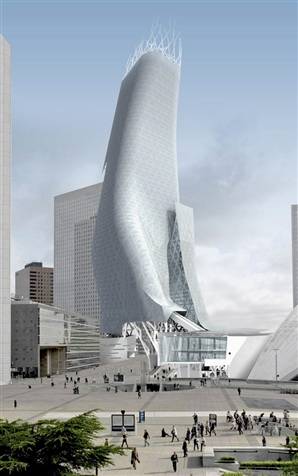
PARIS — Developers have selected a design by an award-winning American architect for a bold new building nearly as tall as the Eiffel Tower — and powered partly by the wind.
Dubbed the Lighthouse, the 984-foot-high skyscraper will be designed by Pritzker Prize winner Thom Mayne and erected at La Defense, a complex of office towers in a business district west of Paris where many of France’s major corporations are headquartered.
The Unibail development company announced Monday that Mayne, who works for Santa Monica, Calif.-based firm Morphosis, had bested nine other architects to win the bid. His design shows a building curving asymmetrically upward, topped by a crown of spiky antennae.
More
Wednesday, November 15, 2006
Neanderthal DNA secrets unlocked
A genetic breakthrough could help clear up some long-standing mysteries surrounding our closest evolutionary relatives: the Neanderthals.
Scientists have reconstructed a chunk of DNA from the genome of a Neanderthal man who lived 38,000 years ago.
Full article
Scientists have reconstructed a chunk of DNA from the genome of a Neanderthal man who lived 38,000 years ago.
Full article
Subscribe to:
Posts (Atom)
